
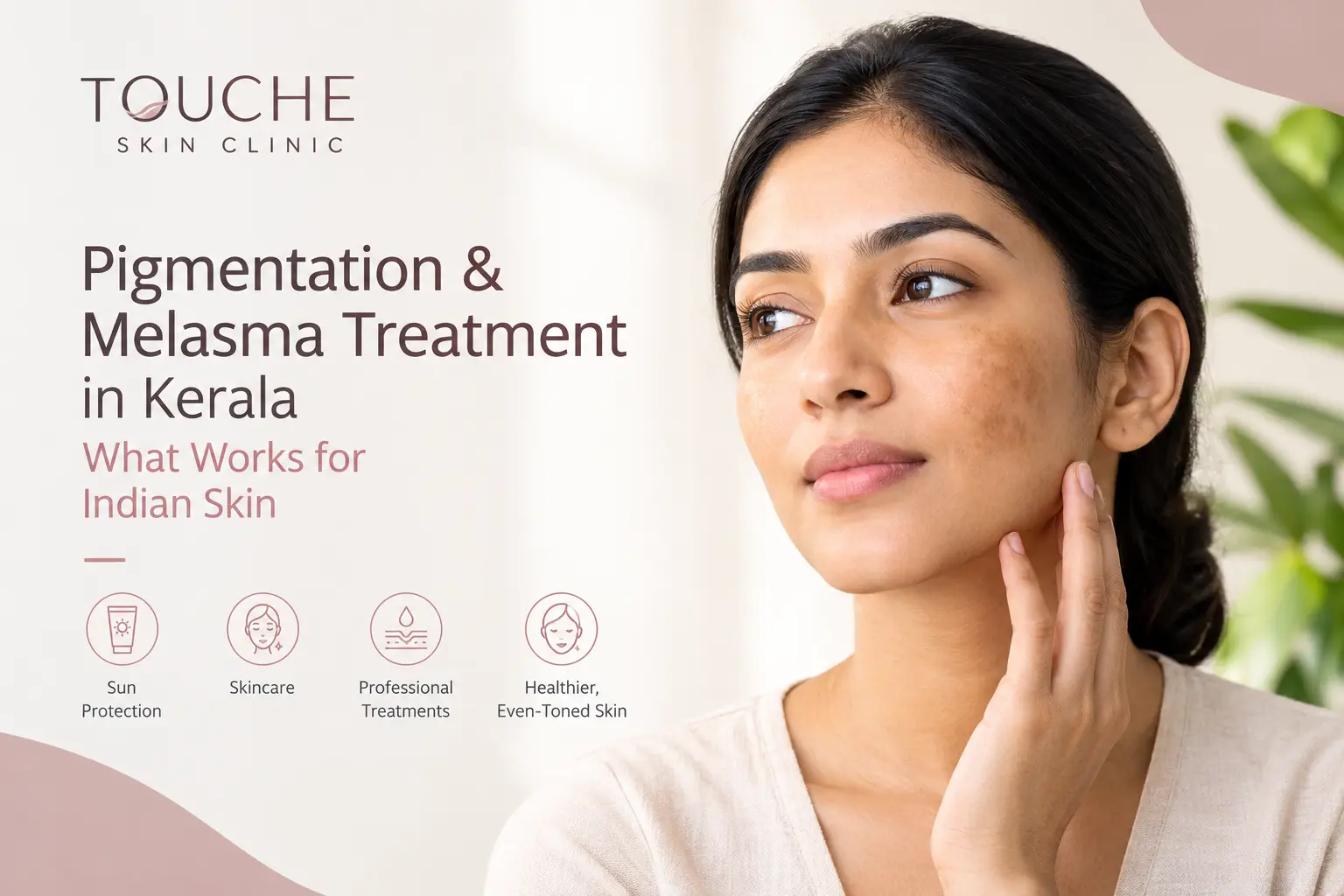
Pigmentation and melasma on Indian skin will work best with a routine that includes sun protection, prescription creams and gentle treatments such as light peeling or low energy laser toning. It is important to choose the correct products according to your skin type and pigmentation type as aggressive treatments can actually cause patches to darken.
What Is the Difference Between Pigmentation and Melasma?
The general term used for patches of pigmentation on the skin are known as pigmentation. This can include sunspots, dark spots caused by acne and irregular skin tone.
Melasma is a type of pigmentation that most often appears as brown or grey brown patches on the face (cheeks, forehead, nose and upper lip). It can be caused by hormonal changes, sun exposure and genetics. They can present very similarly but will require different treatments. Identifying what has caused it will help you choose the correct treatment.
What Causes Dark Patches on Indian Skin?
Several factors can contribute to pigmentation:
- Sunlight can encourage increased melanin due to UV rays. This can cause the dark areas to become worse.
- Hormonal imbalance can be a factor in causing melasma. This can be caused by pregnancy and some hormonal based medication.
- Pimples, scratching and irritated skin can leave dark spots on the skin.
- Using harsh products can cause the pigmentation to get worse. These can include aggressive scrubs, irritating ingredients and using the wrong treatment.
As you’re likely going to get lots of sun exposure in Kerala, it is really important to look after your skin. You may find that you have increased sweating due to the heat and humidity so make sure to re apply sun cream.
Which Pigmentation Treatments Work for Indian Skin?
Unfortunately there isn’t a straightforward answer to this. Visit a dermatologist who will assess your skin type and advise you on which treatments will work best for you based on your pigmentation type, depth and severity.
1. Sunscreen and Daily Skincare
Sunscreen is a key part of your skincare. Make sure it is a broad spectrum sunscreen with an SPF 50. Apply every 2 hours when outside or after swimming or heavy sweating.
Tinted sunscreens with iron oxides in can help protect against visible light that can make melasma worse. Try wearing a hat or umbrella and staying in the shade. You can also use skincare products such as azelaic acid, vitamin C and niacinamide to treat. Severe pigmentation may require prescription treatment.
2. Medical-Grade Chemical Peels
Chemical peels may be beneficial for evening out skin tone and pigmentation. The type and strength of chemical used will depend on the patient, however Indian skin can suffer post inflammatory hyperpigmentation following irritation. A professional diagnosis would be required.
3. Laser and Other Clinic-Based Treatments
Some types of laser may be beneficial to treat some pigmentation problems. However this can depend on the individual and may worsen some pigmentation issues.
The type of laser used, settings, skin type and skill of the practitioner can impact how suitable the treatment will be. You should have a qualified practitioner assess your skin type and discuss the benefits, risks and alternative treatments available.
Is Laser Toning Safe for Indian Skin?
Laser toning can be helpful in the right candidates but is not a guaranteed permanent solution for melasma. There can be variable results and treatment can cause irritation, reactivation of pigmentation and patchy skin if multiple sessions are undertaken. It is very important to do a thorough assessment on darker skin types. Ask about what results to expect, any possible side effects and how often you will need top up sessions.
How Long Does Pigmentation Treatment Take?
Pigmentation can be slow to fade. Acne-induced redness can take a few weeks to start improving. Melasma can also require a couple of months of treatment and maintenance.
The outcome can vary depending on the cause of pigmentation, how deep the pigmentation is, what treatment you are using and how well you look after your skin with sun protection. Melasma can be difficult to fully remove so looking after your skin in the long-term is important. Be cautious of any treatments that promise completely clear skin within a few days.
What to Expect at Your First Consultation
During a consultation with your skin specialist, they may perform a visual examination of your affected areas. They will also take into account your medical history, your current skincare products and any hormonal fluctuations you may be experiencing.
These allow your specialist to accurately determine if it is melasma or a different skin condition such as acne scarring, sun spots. This allows them to tailor your treatment plan to your skin type.
Daily Habits to Help Manage Pigmentation in Kerala
Simple habits can support your treatment plan:
- Use a high SPF sunblock (SPF 50) every morning.
- Sunscreen should be reapplied roughly every 2 hours outside and after excessive sweating.
- Wear a hat, umbrella or protective clothing to protect from the sun.
- Do not squeeze spots, exfoliate dark patches or use unknown fairness creams.
- Keep your skin care routine simple.
- Stick to the advice of your skin specialist. Don’t change up your treatment too much.
When Should You See a Skin Specialist?
If your dark patches aren’t improving, are getting worse or happening often, seek advice from a skin specialist. If you have any new dark spots or changes in dark spots seek an assessment.
Early assessment can help identify the cause and reduce the risk of using unsuitable treatments.
Looking for Pigmentation and Melasma Treatment in Trivandrum?
At Touche Skin Clinic you will find a variety of professional treatments that will address pigmentation and skin lightening concerns. You will have a personal consultation to help advise what treatments may be right for you.
Take a look at our range of Pigmentation & Skin Brightening Treatments. If you have any questions about appointments please call or WhatsApp us on +91 62380 01552. Our goal with pigmentation treatments is to help even out your skin tone safely without affecting your skin’s health.
Frequently Asked Questions About Pigmentation and Melasma
Find answers to common questions about pigmentation treatment, melasma care and options for Indian skin in Kerala.
What is the best treatment for pigmentation and melasma in Kerala?
The best treatment depends on the type and severity of pigmentation. Options may include daily sunscreen, suitable skincare, prescription creams and selected chemical peels or laser procedures. A skin specialist can recommend an approach based on your individual needs.
What is the difference between pigmentation and melasma?
Pigmentation is a general term for dark patches or marks on the skin. Melasma is a specific condition that commonly causes brown or grey-brown patches on the cheeks, forehead and upper lip. A professional assessment can help distinguish melasma from other causes of dark spots.
Why is pigmentation common in Indian skin?
Indian skin can be more prone to persistent dark marks after inflammation, such as acne or irritation. Sun exposure, hormonal changes and unsuitable skincare products can also trigger or worsen pigmentation.
Does Kerala's sunny and humid climate make melasma worse?
Sun exposure can worsen melasma, and UV protection is important throughout the year in Kerala. Use broad-spectrum SPF 50 sunscreen, reapply about every two hours outdoors and after heavy sweating, and use shade or protective clothing when possible.
Is laser treatment safe for pigmentation on Indian skin?
Some laser treatments may help selected pigmentation concerns, but they are not suitable for everyone. Incorrect treatment or settings can cause irritation and further darkening. A qualified professional should assess your skin, explain the risks and discuss alternatives before recommending a procedure.
How long does pigmentation treatment take to show results?
Results vary depending on the cause, depth of pigmentation and treatment plan. Some dark marks improve over several weeks, while melasma may require several months of care and ongoing maintenance. Consistent sun protection helps support results.
Can melasma be removed permanently?
Melasma can often be improved, but it may return because of sun exposure or hormonal factors. Long-term sun protection, suitable skincare and professional follow-up can help manage recurrence. No treatment can guarantee permanent removal.
When should I consult a skin specialist for dark patches?
Consider a consultation if pigmentation persists, spreads or does not improve with basic skincare. New or changing dark spots should also be assessed by a qualified professional rather than treated with unverified creams.
Where can I enquire about pigmentation treatment in Trivandrum?
You can explore pigmentation and skin brightening options at Touche Skin Clinic in Kerala. Visit our Pigmentation and Skin Brightening Treatments page to learn more, or contact the clinic to enquire about an appointment.
Treatment suitability and results vary from person to person. A professional skin assessment is recommended before starting treatment.
